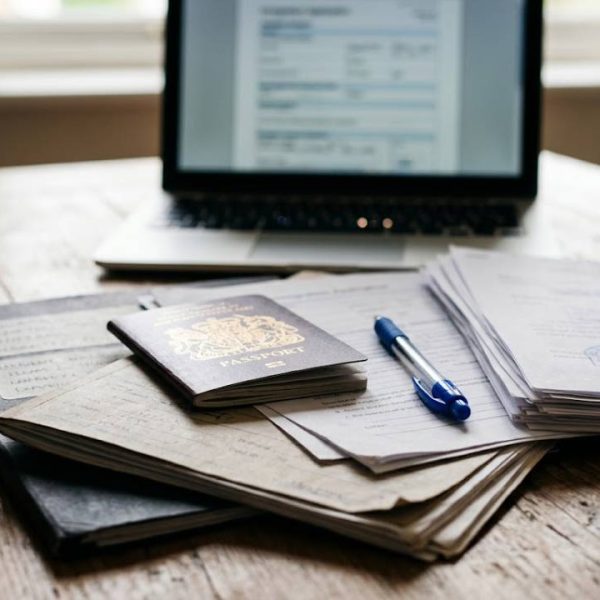
Immigration cases are long, and a small mistake can make them longer. One of the most common causes of delay is not missing evidence but a translation that does not meet the rules.
When USCIS finds a problem, it often sends a Request for Evidence, which pauses the case until you reply. Most of these requests are avoidable with a translation that follows a short list of rules. Here are the mistakes that appear most often.
Sending a foreign document without any translation
Any document that is not in English must be filed with a full English translation. That includes certificates, court records, bank letters and school documents. Sending only the original, even with a note, is the simplest way to invite a request.
Applicants sometimes assume that a clear stamp or an obvious form needs no translation. It does. Officers cannot rely on guesswork.
Leaving out the translator's certification
USCIS expects the translator to certify that they are competent to translate from the foreign language into English and that the translation is complete and accurate. The certification should carry the translator's signature, printed name, address and the date.
A beautiful translation without this statement is treated as incomplete. Ask your translator to attach it to every document, not only to the first page of the first one.
Translating only part of the page
Stamps, seals, handwritten notes and marginal remarks are part of the document. If they carry information, they need to appear in the translation, even if they look unimportant.
A common shortcut is to translate the printed text and skip the stamps. Officers notice. A good translator describes each seal and translates what it says.
Translating your own documents
The rules do not forbid translating your own papers, but doing so rarely helps your case. An independent translator has no stake in the outcome, and that independence is what adds weight to the certification.
For this reason, most applicants prefer an outside provider. Professional USCIS certified translation services know the format and add the right statement without being asked.
Inconsistent names and dates
Names are the biggest source of confusion. A passport transliterates a name one way, a certificate another, and an old document may use a different spelling again. Send a copy of the passport to the translator and ask for consistent spelling across the whole file.
Dates need the same care. The notation 03/04 means March in the United States and April in most other countries. Write the month in words.
Skipping the second look
Many translations contain small slips that a careful read would catch: a transposed digit, a missing middle name, an unstamped page. Read the translation against the original before filing, line by line.
A ten-minute review is far cheaper than a Request for Evidence. If you find an error, ask for a correction and a fresh certification.
Marriage and family documents
Marriage cases rely on a stack of civil records: marriage certificates, divorce decrees, birth certificates and sometimes court orders. Each one must match the others on names, dates and places.
Household paperwork does not stop at certificates, because couples and housemates increasingly sign shared-living agreements that carry real legal consequences. When those agreements are drafted or translated carelessly, a deposit or notice clause can read differently to each signer, much like the mismatched dates described above. Careful legal translation services combined with thorough editing and proofreading can make a co-living agreement as dependable as the civil records in an immigration file.
The details of what officers look for are explained in this guide on marriage certificate translation for visa and immigration, including the mistakes that lead to rejections.
Not reading the current instructions
Rules and forms change. Before you file, read the current instructions for your form and the translation requirement on the official site of USCIS. Save a copy of the page you relied on.
If you hire an adviser, check that their advice matches the official text. When the two differ, the official text wins.
Poor scans and missing pages
A translator can only translate what is visible. Blurry photos, cut-off edges and missing pages lead to questions, and every question costs a day. Scan flat, in colour, with every page in order, including the back if it carries stamps.
Name the files clearly, and keep the original, the translation and the certification together.
Filing online and by mail
Many applications can now be filed through an online account, where documents are uploaded as PDFs. Keep file sizes reasonable, and make sure the certification appears on the same page as the translation or in the same file.
If you file by mail, send copies unless the instructions ask for originals, and keep a complete duplicate set for your own records.
Timing mistakes
Applicants often order translations at the last minute. Short documents usually take one to three working days, longer files take more, and rush options only help when the scans are clean.
Plan the translation alongside document collection. Waiting for the final original before starting often wastes weeks.
What it should cost
Short certificates are often charged per page, long documents per word. Ask what the price includes: the certification, delivery and a round of corrections. Compare the final total, not the headline rate.
A cheap translation that triggers a Request for Evidence costs far more in the end.
The bottom line
Translate every foreign-language document in full, attach a signed certification, keep names consistent, use an independent translator and read the official instructions before filing.
Do those five things and the translation stops being the reason your case slows down.